“Don’t forget me when you are famous!”
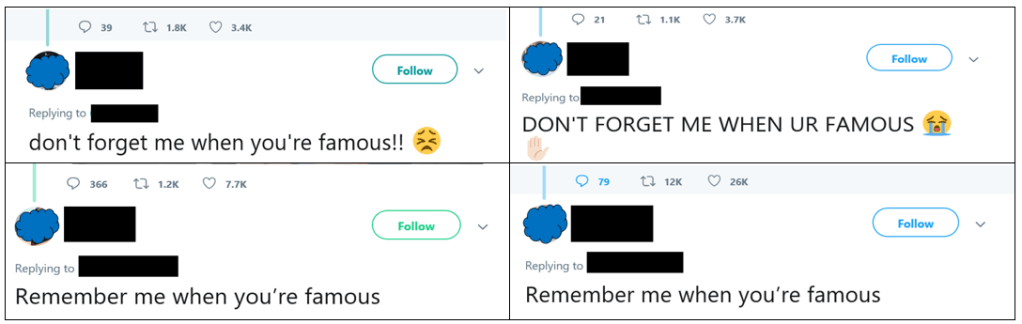
Social media users might have seen this common comment by friends or long-term followers of the content poster under a post or tweet that had gone viral or received many retweets / likes, like the ones shown in the snippets of some Twitter tweets below.
Viral posts / tweets are rare. For some, virality is short-term, and for some, it had long term effect. However, for most, it did not work towards their favour.
In my previous blog posts, I covered about relevant aspects that contributed towards virality such as the Facebook segmentation matrix to identify the right target group, approaches for the spread of ideas and contents, marketing for mobile social media applications, how IoT and big data can link the business / product with consumers, and how the science and art aspects of SEO are vital for a successful SEO. In this blog post, we will explore reasons why some contents did not go viral and examples of solutions to improve.
Reasons for lack of virality:
1. Digital-only Integrated Marketing Communications (IMC):
Marketing strategies must consider both online and offline elements. The first principle of IMC is consistency, and when the online strategy is unmatched with offline strategies, it is considered as a breach. This leads to a confused brand message which will confuse consumers.
There is a shift towards omnichannel marketing. Therefore, if the business only focus on online strategies, they would loose out on reaching and interacting with customers across other touchpoints such as physical (e.g. feel of product and store) and sensory (e.g. sounds and scents of product) interaction as the experience is inconsistent. Consumers will exprience their own journeys across the multiple channels and touchpoints, and each touchpoints matters as it impacts the customer’s experience. Therefore, there should be consistency and unified customer service and shopping experiences (Branwell Moffat, 2017).

2. Lack of Clear Understanding of Target Audience:
It is important to clearly identify target audience by demographic and psychographic (attitudes, interests and behaviors), to develop key messages and identify the best communication channels (Linda Pophal, 2014).
For example, Bloomingdale’s, a high-end fashion retail, 2015 Christmas advertisement appeared to promote date rape with their advertisement message. Despite being a high-end retail business, Bloomingdale’s failed to ensure proper advertisements that matched their target customers and image. Although virality was achieved, it received negative responses from their customers and non-customers.
3. Lack of Emotional Appeal:
Emotional appeals in advertisements attempts to evoke strong emotional feelings to make potentially make content more viral as some reasons why people share emotionally charged contents is to make sense of experiences, to deepen social connection or make use of Jonah Berger’s social currency to improve their image. A lack of emotional appeal might not resonate, evoke thoughts / emotions or encourage sharing of content.
An example of an successful viral advertisement which used emotional appeal:
The “Always #LikeAGirl” advertisement by feminine care company “Always” managed to achieve virality because they managed to address social perceptions of females which evoked some anger and empathy.

4. Not “Share-worthy”:
A content is “share-worthy” if it resonates with the audience or is funny, useful, relevant or that it also affects others, and more. Some factors that could be missing from advertisements / campaigns / business that were considered as not “share-worthy” includes the lack of triggers, lack of practical value, lack of credibility, lack of connection, and lack of call-to-action prompts.
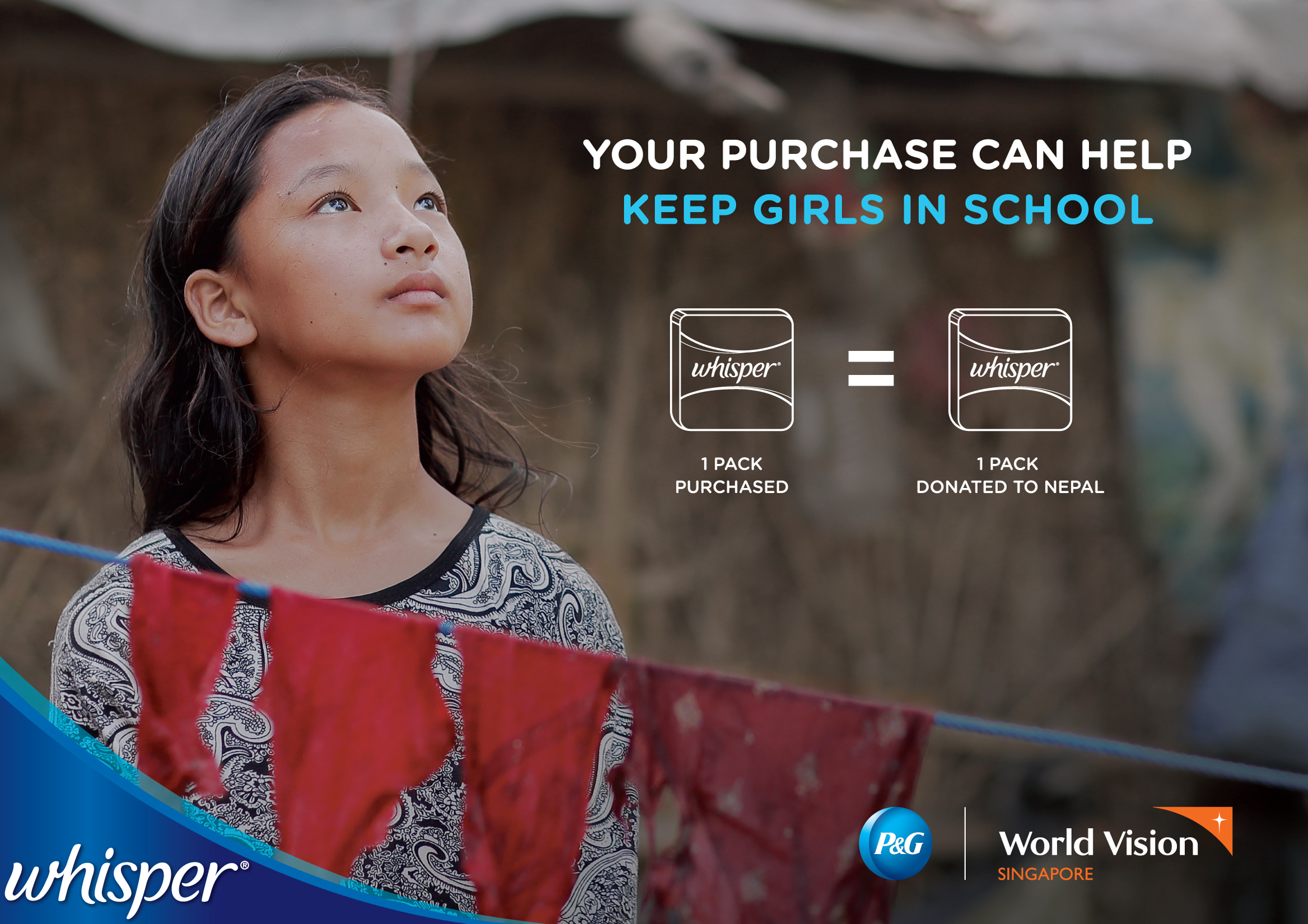
For example, an advertisement about a new menstrual pad solely based on the product might not evoke a lot of shares and affect. However, when emotional elements are incorporated along with the brand, such as the “Keep girls in school” campaign by Whisper, it will resonate more with viewers and even leave lasting memories
5. Wrong Timing:
The timing of the launch of an advertisement / campaign / post is crucial as it affects the demand and and reach towards consumers.
For example, in this current period where COVID-19 affected many countries world-wide, the advertising for a cruise trip / holiday to overseas / hotpot business that encourages group sharing of food would not be effective due to ban on cruise vessels, travel restrictions and fear for sharing food. Promotion of such businesses would lead to lack of content reach as it would not be searched by most people during this period.
6. Poor Visual Appeal:
Visual appeal matters as it affects how viewers will view and perceive an advertisement / campaign / poster. One of the major factor in an advertisement is viewer’s perception. Therefore, a poor visual will not attract attention and even a click to view from consumers.
Some of the recommended advertisement design tips are: to keep it simple, include a call to action, appeal to niches, use visual metaphors, channel some surrealism, and more.
For example, an advertisement with poor appeal:

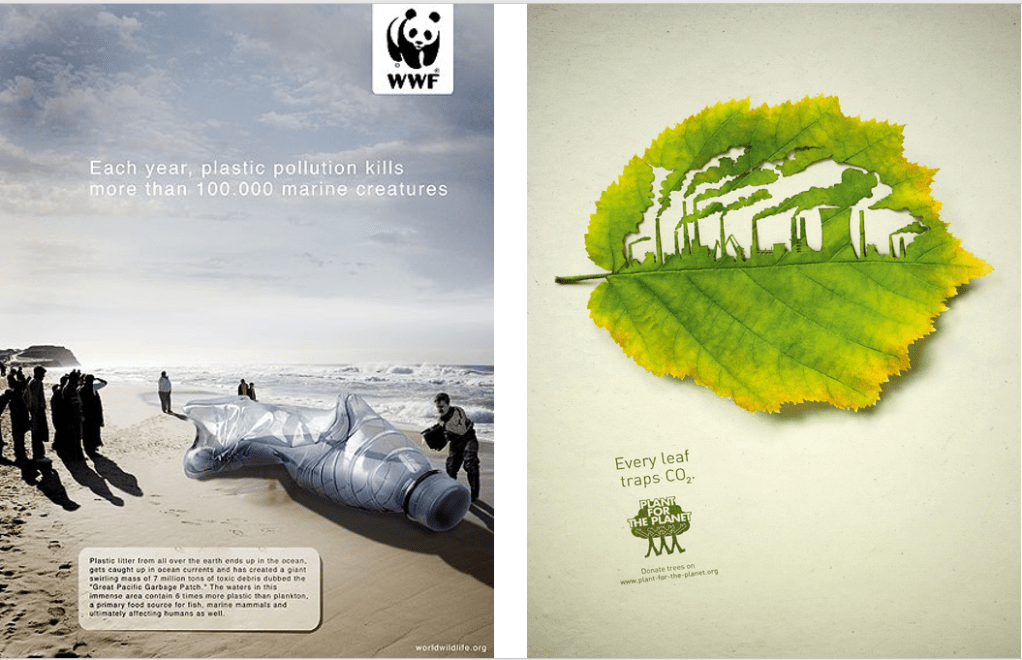
Example of advertisements with good visual appeal by WWF (left) and Plant-for-the-Planet (right)
7. Poor or Wrong Distribution:
Content distribution is the process where content gets discovered, read, and re-shared through promoting to targeted individuals (Bobby Machado, 2019). The use of a wrong or lack of target audience distribution will incur negative impacts as content distribution is essential in expanding reach and overall brand / campaign / advertisement awareness (Bobby Machado, 2019).
Popular distribution channels for contents that worked for businesses are owned channels (e.g. website), earned media (e.g. social medias – Instagram, Facebook and more), and paid distribution (e.g. video advertising – YouTube advertising and more). These distribution channels also provide functions that allows for more opportunities to be shared, such as the Instagram share post function and Twitter retweet function.
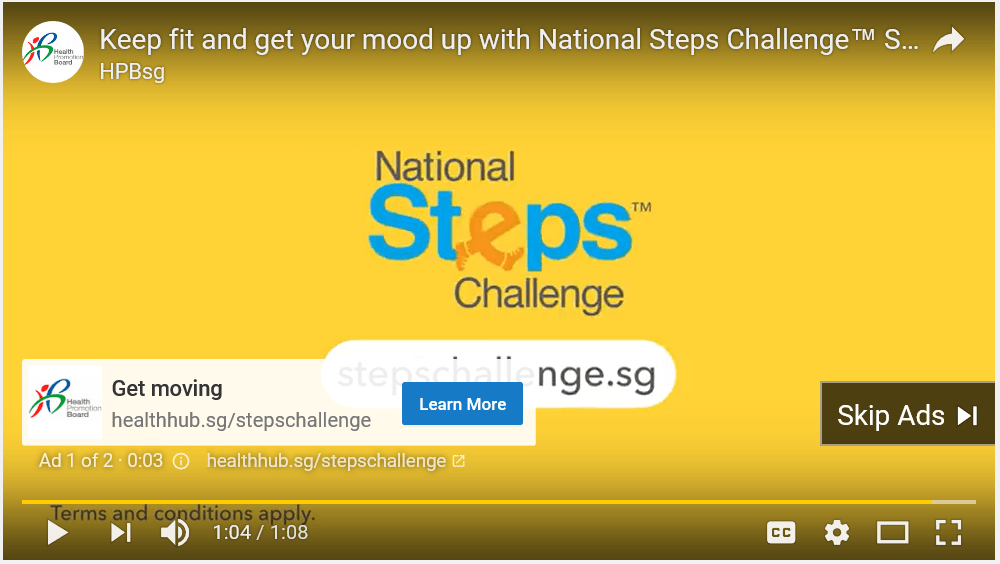
An example of a health campaign (National Steps Challenge season 5, Singapore) being promoted through YouTube advertising:
Conclusion:
Viral marketing is the goal of many companies, although it does not happen to all companies. Positive virality is a strong push for the brand / business / campaign / advertisement to gain wider content reach and even follow-up action from the consumers (such as further search on the brand, purchase, and more).
However, a lack of virality can also increase the brand value over time as long as the business conducts the right marketing with the right techniques (such as some of the mentioned solutions and examples above), to build up a base and recognition over time. There are also brands that are successful without virality. For example, established long-time local bakery “Four Leaves Bakery” did not conduct much advertising but is still a popular bakery among consumers with various positive reviews online. Krispy Kreme is another brand that does not conduct much advertising as the brand was build on word-of-mouth.
Therefore, positive virality is a bonus and an opportunity to capitalise and build on the sudden increase in brand awareness / popularity, and negative or the lack of virality is a chance to learn from experiences, relook and replan marketing strategies for future strategies.


 SXW's Digital Marketing Learning Journey
I agree that positive word of mouth would make something go viral if the word of mouth is strong enough. Word of mouth are also exponential growth so it multiplies each time it spreads. As long as the positive word of mouth doesnt stop from someone, more and more people will get to know about the brand/advertisement day by day.
LikeLike
Thank you for reading my blog post! 😄 Word of mouth does contribute towards information spread and vitality too. However, it can also end quickly for each sender. For example, a person might spread the 1-for-1 promotions by sending the message or posting it only once and leave the spreading to others who received the message.
LikeLike
Personally, I feel that word of mouth is the most effective way to spread message. This is because it will be authentic so we won’t worry it is a scam. This can be the fastest way as well, since everybody got other own network of friends.
For, me the most important factor I see applied to my own life is emotional appeal. For example the recently covid news spread very fast due to the fear factor. the emotion of fear and worry makes people spread any kinds of news they can get
LikeLike
Thank you for reading my blog post! 😄 Oh. I would still try to check to ensure that the information received through word-of-mouth is accurate as information might change after being passed around from person to person. Understand regarding the spread due to fear as we want to inform and warn our peers and family too.
LikeLike
Hi! I agree that there are many components to consider in order to create a successful advertisement. Personally, i feel advertisement that works with emotion creates the most impact and viral effect. Especially Thai advertisement! Those that actually went viral on Facebook for its comedic or unique content.
LikeLike
Thank you for reading my blog post! 😄 Agree with the emotional impact as it tends to capture attention more. Since I did not come across any Thai advertisement, I wonder what comedic or unique content they had used as it might be different from the advertisements we usually see.
LikeLike